


Arthrosis refers to degenerative pathological processes in joint-cartilaginous tissues, accompanied by their thinning and destruction.Arthrosis is characterized by limited motor skills and intense pain.The treatment of arthrosis of the knee joint or gonarthrosis is quite multifaceted, because there are many effective therapeutic methods against arthrosis: drugs, operations, diet, massage, etc.
How and why pathology develops
Gonarthrosis develops for the following reasons:
- Damage to the meniscus, which can lead to locking of the knee.Statistics show that patients with a removed meniscus develop knee arthrosis in 90% of cases;
- Other injuries such as sprains, fractures, cracks, bruises, etc.This factor is more often present in young patients;
- Obesity leads to an increased load on the joint structures, especially the knees, because all the excess weight puts pressure on the lower limbs.And if, in addition to obesity, the patient also has varicose veins, then there is a high probability of developing a severe form of gonarthrosis, which is difficult to treat;
- Increased load on the knees, which is typical for athletes, loaders, etc.;
- Pathological processes of joints such as arthritis, etc.;
- Metabolic disorders;
- Stress, hypothermia.
Symptoms of knee arthrosis
Arthrosis has the following symptomatic manifestations:
- Accumulation of fluid in the joint cavity, which leads to the development of Baker's cyst;
- At first, the pain is weak and occasional, but with the development of pathological processes it becomes intense and constant.Moreover, the process of such a transition can last for several years, until a factor that causes deterioration appears;
- Creaking in the knee, causing pain.A similar symptom appears already in the 2nd or 3rd stage of the development of gonarthrosis;
- Impaired mobility of the joint is manifested by the inability to bend the limb, and the patient feels severe pain.In parallel with that, joint deformation develops, which is visible without special devices.
The degree of pathology development
Gonarthrosis is characterized by three stages of development.The first degree is characterized by the presence of mild pain during physical activity.At this stage, synovitis may develop with further cyst formation.The damage to the articular cartilage is not visible from the outside, but it has already become active and is gradually increasing in intensity.
When bending, the symptoms of pain may be supplemented by a specific creaking.This sign is considered specific for knee arthrosis.
In gonarthrosis of the second degree, the joint space narrows, which is clearly visible on the radiograph.Bone tissue begins to grow.Any, even slight movement of the knee causes acute pain.Such symptoms disappear quickly after a short rest, but reappear after the next activity.
A typical sign of gonarthrosis of the third degree is a noticeable deformity of the knee.Moreover, it is no longer possible to get rid of the pain by stopping the movement, because the pain is present even in a quiet state.
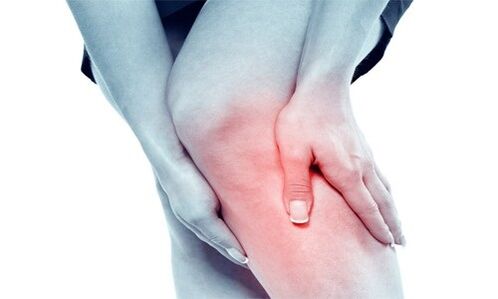
Approach to knee arthrosis treatment
Complex therapeutic tactics can solve the following problems:
- Strengthen the muscles that support the joints, increase the elasticity and flexibility of tendons and ligaments;
- Get rid of pain symptoms;
- Accelerate recovery processes and improve nutrition in the cartilage structures of the knee;
- Normalize blood flow in the affected area;
- Increase joint mobility;
- Reduce compression in the affected area;
- Increase the distance between the bones.
Treatment processes are based on the prescription of drugs, surgery, special diet, physiotherapeutic procedures, therapeutic exercises, etc.
Drugs used
Treatment of arthrosis of the knee joint is based on the use of drugs that provide symptomatic treatment and stop the further progression of gonarthrosis.Non-steroidal anti-inflammatory drugs, hormonal drugs and chondroprotectors cope well with such tasks.These drugs effectively relieve pain, but are contraindicated for long-term use in order to avoid the development of unwanted side effects.Therefore, the duration of NSAID therapy should not exceed 2 weeks.
Among the hormonal drugs that are often prescribed for gonarthrosis, the following deserve attention:
Hormonal drugs are prescribed in cases where NSAIDs do not cope with the pathological process.But hormone therapy is characterized by a lot of side effects, so it doesn't last long.
Chondroprotective drugs quite effectively restore joint functions.These drugs have a complex effect - they reduce pain symptoms, stabilize pathological processes and provide articular cartilage with increased nutrition.There are the latest chondroprotectors, which, in addition to the effect of restoring joint tissue, also have an anti-inflammatory effect.
Operation
Sometimes there is a need for surgical treatment.Treatment of knee arthrosis is possible using several surgical methods:
- Arthroscopy;
- Endoprosthetics;
- Osteotomy.
The easiest option for surgical intervention is arthroscopy, during which the affected areas of the joint are removed with small stitches.
The main goal of arthroscopic intervention is to prolong the functionality and performance of the knee affected by arthrosis.
But the most definitive surgical method is endoprosthetics, which involves replacing the knee-joint fraction with artificial implants.The efficiency of this operation is about 90%.As for the osteotomy, this operation involves performing an artificial fracture, after which the bone is fixed in the anatomically correct position.
Physiotherapy
Physiotherapy procedures also play a leading role in complex antiarthrosis.They ease the course of gonarthrosis, relieve pain, relieve spasms of muscle tissue and shorten regeneration time.And if electrophoresis is used with the drug, then the patient's dose of this drug when taken orally is reduced.
The goals of physiotherapeutic procedures in gonarthrosis are to eliminate pain, reduce the severity of symptomatic signs, accelerate joint regeneration and improve nutrition of the damaged joint.
Ultraviolet radiation and magnetic therapy are used to relieve pain.To eliminate inflammatory processes, infrared laser therapy or UHF treatments are prescribed.In addition, ultrasound therapy, darsonvalization and medicinal baths are indicated.
Diet therapy
The success of therapeutic measures against arthrosis is largely determined by a properly formulated diet.Why?Sometimes the cause of the arthrosis process is metabolic disorders, in the development of which poor nutrition plays an important role.
An unbalanced diet leads to obesity, which puts additional stress on the knee joints.Therefore, it is recommended to follow a diet during and after the treatment of gonarthrosis in order to prevent joint pathology.
Diet therapy for knee arthrosis is based on the consumption of food enriched with enriched compounds and essential microelements.At the same time, you must monitor the calorie content of the food you eat to avoid excess weight.If you are overweight, it is recommended that you consume more calories than you take in, then your body weight will return to normal.
Exercise therapy
Therapeutic and gymnastic treatment is rightfully considered one of the leading elements of the complex treatment of gonarthrosis.Performing exercises helps to strengthen and restore joint activity.The main thing is to perform the elements smoothly and slowly.Popular exercises:
- Lie on your stomach.Raise your legs one at a time;
- From the position on the side, raise the limb with a delay of a few seconds;
- From the position on your stomach, raise your legs and perform abduction and extension movements.
Attention!This exercise is contraindicated for hypertensives and other heart patients, as it causes an increase in blood pressure.
It is useful to perform massage by rubbing in the direction from the knee joint to the hip joint.The massage ends with caressing the skin.
Methodology of a rheumatologist
The method of treating gonarthrosis according to the rheumatologist's program is based on the use of physiotherapy in combination with drug therapy:
- Taking NSAIDs;
- Chondroprotective drugs;
- Topical pain relievers such as ointments and creams;
- Injection infusions into the joint;
- Manual therapeutic procedures;
- physiotherapy;
- Light physical activities.
As a result of using this technique, former mobility is restored, blood flow to the affected knee is normalized, pain is alleviated, and joint cells receive increased nutrition.
Original technique
This proprietary technique has unique therapeutic properties.This program can save a patient from arthrosis without the use of surgery or drugs.This technique is a mixture of physiotherapeutic and kinesitherapeutic treatment methods.Each patient receives a private treatment regimen and training schedule.
The patient is not recommended to use painkillers, as this problem can easily be solved by putting ice on the knee and a contrast shower.As a result of regular training according to the method:
- The patient is free from pain;
- Bone joints, joints and cartilage begin to receive increased nutrition;
- The former functionality of the knee has been restored.
Such classes are conducted under the supervision of an experienced instructor in specialized clinics.Massage procedures, swimming and sauna are indicated as additional therapy.